Ice dams form on Bayside roofs because warm attic air keeps the upper roof deck above 32°F while the eaves stay below freezing, so meltwater refreezes at the overhang. The fix has two halves: remove the existing ice…
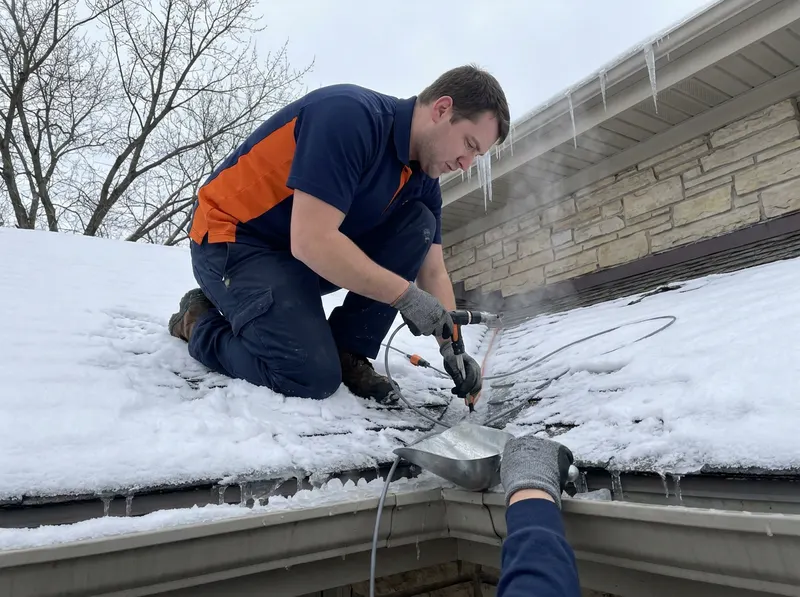
Ice dams form on Bayside roofs because warm attic air keeps the upper roof deck above 32°F while the eaves stay below freezing, so meltwater refreezes at the overhang. The fix has two halves: remove the existing ice safely, then correct the heat loss so it does not return. Low-pressure steam is used for removal because it melts the ice at roughly 250°F without chipping the shingle mat or the granule surface; chisels, hammers, and salt pucks crack shingles and void many manufacturer warranties. On older homes along the Brown Deer Road corridor and in Ravine Woods, where roofs sit under mature tree cover and hold snow longer, ice dams tend to recur at the same north-facing eaves each winter.
Prevention starts inside the attic, not on the roof. The three drivers of ice dams are attic air leaks, thin insulation, and blocked soffit ventilation. Sealing top-plate gaps, recessed-light penetrations, and the attic hatch keeps warm household air out of the roof cavity; adding insulation to bring the attic up toward R-49 to R-60 keeps the deck cold; and clearing or adding soffit-to-ridge ventilation flushes any heat that does escape. Homes in Fairy Chasm and Ellsworth Park with finished attics or vaulted ceilings have less room for insulation, so those often need ventilation baffles and targeted air-sealing rather than a simple insulation top-up.
A self-adhering ice-and-water membrane along the eaves is the roof-side backstop. Wisconsin's climate calls for this membrane to extend at least 24 inches inside the exterior wall line, which on a typical eave means the first 3 feet of roof. When a full roof or eave section is replaced on homes in Tennyson Heights, Indian Creek, Blackhawk, or Bayside Terrace, this membrane is standard practice and prevents backed-up water from reaching the deck even if a small dam forms.
Decision guidance is straightforward. If there is an active leak or a visible ice wall right now, steam removal comes first to stop interior damage. If the roof is dry but the same eaves iced up last winter, the priority is attic air-sealing and ventilation, because removal alone treats the symptom and the dam returns. Heat cables are a partial option for a short problem eave or a valley that cannot be ventilated, but they add electrical cost and do not fix the underlying heat loss, so they suit narrow trouble spots rather than a whole roof.
Every job gets a firm, written price after a free on-site visit.
Tell us about your ice dam repair & prevention job in Bayside and we'll send a clear, written quote, usually the same day.
 North Shore Roofers